Most companies are somewhere in the middle: they know AI exists, some have paid for tools that did little, others are waiting for the technology to “mature”. This article is not about visions. It is about the kinds of work small and mid-sized companies can automate today, where AI is not ready, and how to start without wasting budget.
What AI automation means in practice
“Artificial intelligence” is broad. For a smaller business it comes down to five concrete things.
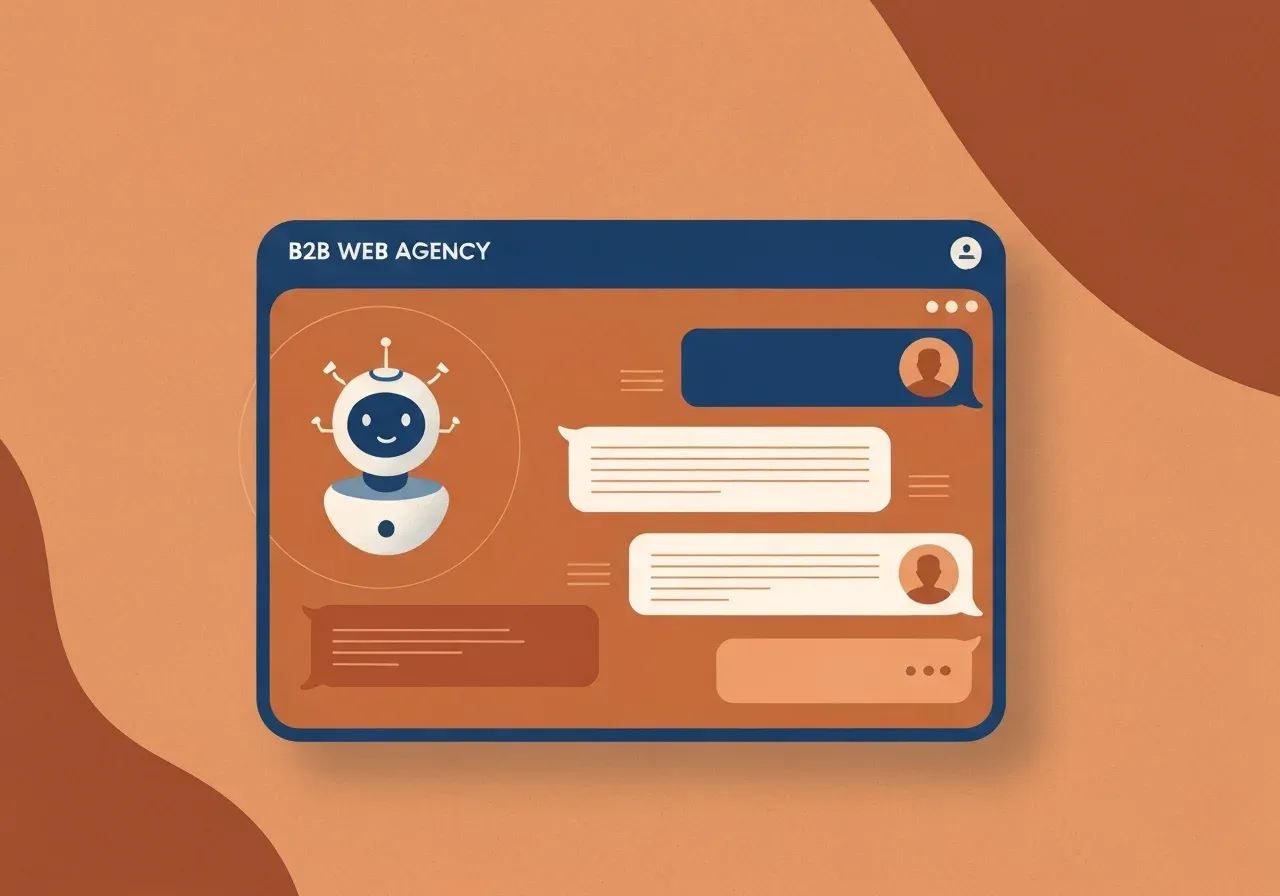
- Chatbots and customer communication. Software that answers frequent questions (opening hours, prices, order status) without a person. Not everything can be automated, but routine questions can.
- Document processing. Invoice recognition, data entry from PDF files, contract summaries. A company that handles hundreds of documents a month saves real hours here.
- Lead qualification. The system scores incoming enquiries, so the sales team gets a sorted list instead of random contacts.
- Content drafting. Product descriptions, e-mail variants, social posts. A person edits and decides; AI prepares the base.
- Analytics and forecasting. Demand and stock planning, churn-risk signals. AI works on historical data you already hold.
We do not quote time savings or payback periods here: they depend entirely on your volumes and data, and any universal figure would be invented.
Where it usually pays off first
The pattern is the same across industries. The process is repetitive, the input is digital (e-mails, forms, PDF files, catalogue data), and a mistake is cheap to catch.
- E-commerce and trade: customer questions about delivery, returns and availability; matching supplier orders that arrive by e-mail in different formats to your ERP.
- B2B services: sorting website enquiries by fit, so managers talk to qualified buyers first.
- Catalogues: a first draft of product descriptions from specifications, reviewed by an editor.
- Retail and logistics: forecasting what to reorder and when, from sales history.
Each of these works because a person stays in the loop for exceptions. For web chat in particular, see what an AI chatbot really does for a business; for calls, AI phone assistants.
What not to automate (yet)
- High-touch creative work. AI can draft an e-mail, but valuable client relationships need someone who understands context.
- Delicate client situations. Complaints, tough price negotiations, key-account retention. AI can brief the person; it should not replace them.
- Strategic decisions. AI can show data and trends. Whether to enter a new market is a management decision.
A simple test: if the consequences of a mistake are small and the process repeats, automate it. If a mistake could cost a customer or damage your reputation, keep a person in the process.
EU data: decide before you integrate
If customer or employee data goes to an AI service, GDPR applies. Before you sign up, agree three things: where the data is processed, whether the provider uses it to train models, and who is the data processor in your contract. It is much cheaper to settle this before the integration than after.
Three steps to start
- Pick one process. Not “we want AI”, but “we spend 12 hours a week answering e-mails and most are repeat questions”. A concrete problem with a measurable time cost.
- Check your data. AI needs examples: e-mail archive, order history, customer questions. If you do not have them, start collecting before you automate.
- Run a pilot with one metric. Decide what you will measure after two or three months: share of questions resolved, processing time, errors. Without it you cannot know whether it paid off.
Conclusion
Start small: one process, one metric, one pilot. Do not begin with the most expensive solution; begin where the problem is biggest. If you want to see where AI would give the most in your business, talk to us about your project or read about our AI automation service.